
Bitter Blessing
This week I realized that I still have an idolatry problem. My brethren here helped me.

They hijacked the planes and our national spirit. Then we got a coalition to go into Afghanistan. Soon after, we toppled Saddam in Iraq. Friends and family enlisted. Flags were flying on porches and lapels.
Conceptually, I knew that the wars in the Middle East that the United States entered into in the early 2000s were a big deal, but I don’t remember ever feeling any of it coming to my doorstep in north Alabama. Those bombs were flying back and forth over sand dunes oceans away from me.
I was grateful to be driving my five-speed Geo Prizm that got 30-plus MPG in those days. Gas prices were about the only impact that those wars had on my life. And even that was mostly just something to complain about, not something that truly affected our lives.
It isn’t quite the same this time. It hits closer to home and digs a little deeper into the heart.
It was last year, when the U.S. bombed Iran, when I realized how different things felt. It was strange to look on a map and see that the conflict wasn’t way over to the right from where I was sitting — it was just a little bit due north. East Africa is still pretty far out of range and is not a strategic target so it wasn’t like I was actively concerned that something bad would happen to us. But still, it’s a lot closer to home over here.
That feeling came back with the U.S.-Israel attacks on Iran that started over the past few weeks. Alongside the horrifying death and devastation that the war has already brought on Iran and its neighbors in the Middle East, the closure of the Strait of Hormuz has created an energy crisis around the world. For some of us that just means slightly higher prices. But in other places, it has seriously disrupted daily life. Universities had to shut down in Bangladesh and government workers were sent home in Ethiopia.
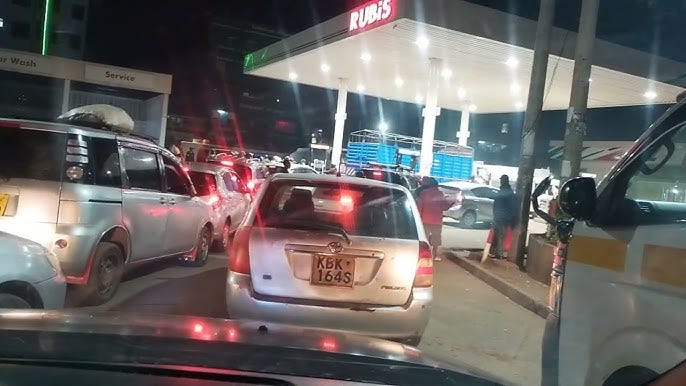
Here in our part of Kenya, this war has meant that there’s been no fuel at the pump. Not that fuel was more expensive or rationed. None. Gone. Not available. It seems now that they’re getting things back on track but for a couple of days the pumps have been dry. That was a pretty weird experience that took my mind to some places.
How long until fuel be available – days, weeks, longer? How many kilometers away is that Bible study that I’ll now need to walk to since we’re on empty? Will some sort of social panic arise from all this? What happens to the trucks carrying food and other necessities? And what kind of impact will this have on hospitals? How will I get down to Nairobi on Tuesday to pick up our visitors who are coming to join us in ministry for a couple weeks?
Of course, almost none of these things are as much of a concern as they seemed in certain moments. The main point of these reflections isn’t that we need any pity for some relatively minor and temporary inconveniences; even if there was no fuel for an extended period of time, we’d be fine and it would all work out.
The real issue is that these past few days exposed to me, yet again, an unpleasant reality about myself.
I think I may have an idolatry problem.
I’ve lived my entire life in the most robust, prosperous economy that the world has ever known. Our land has two giant oceans serving as a buffer from foreign military threats. Historically, the rule of law has (generally) been maintained to keep the social order intact. It might have been a little pricier than I would have liked, but I’ve never pulled into the gas station unsure if I could drive off with a full tank.
Unfortunately, without realizing what was happening I think that those sorts of things have become a source of stumbling for me, training me to trust in them. Removing the (false) security blanket of a bunch of worldly sources of strength exposes a lack of real faith.
Jesus said that we’re not supposed to worry about food or clothing. If he were preaching to some of us today, maybe he would have added military security or access to petrol to that list. If and when I do let those things worry me, then he says I am, “You of little faith” (Matt. 6:30). In other words he says, “You have let something – something of the fallen world you occupy – become the god that you trust in more than your Father in heaven.”
Someone has said that the sin of idolatry is the default mode of sinful man. If unchecked, we give our reliance and allegiance to things or people of this world to find our security and satisfaction. It doesn’t feel very nice to face the reality of our idolatry, but I think it’s better to confront it than to remain ignorant of it. At least then we can do something about it.
Wednesday afternoon I was in the peak of thinking too much about the little situation we are facing, but it was time to go to midweek Bible study at Chaka so we loaded up to burn off another few liters of precious fuel. We arrived to a packed out meeting place, everyone having walked and taken overstuffed public vans to get themselves there. As usual, the concrete walls reverberated with the passionate singing. First, a Kikuyu song tracing the story of the Promised Land – from Abraham to Joshua to Ezekiel’s vision for us. Then, “Come Thou Fount of Every Blessing … Tune my lips to sing thy grace. Streams of mercy, never ceasing, call for songs of loudest praise.” After we prayed sitting on the homemade wooden benches we opened to our text for the day: James 5:7-20. Patience in difficult days. The Prophets and Job. Prayer, Song, and Confession.
Sitting there I couldn’t help but weep a little bit, confess and repent of my idolatry. My brethren face daily pressures of extremely complex and challenging circumstances and yet you wouldn’t know it from their earnest worship and full embrace of the teachings of Scripture, even and especially Scriptures that exhort how to respond to times of trial. They have their idolatries too, just like me, but in this moment they showed me the liberating goodness of trusting in God to take care of it all. Being there with them made me hear the Spirit’s call to turn away from the idols of worldly security — the illusion of control, of needing things to work the way I have planned — to be content, trusting in God with whatever he may provide.
When you find that the things you depend upon are taken away, it’s a bitter blessing. I pray God will keep showing my idols so I can work with him to cut them out of myself completely. That’s the way of salvation. Like Jesus said, if you seek his kingdom first and above all else, you don’t have to worry about anything else. You especially don’t have to worry about your idols letting you down.
Reading this made me reflect on my journey and how no matter which side I find ourselves in "poverty or in prosperity" we need ensure we aren't making anything an idol.
this article reminds me of scripture
philippians 4,11-13
not that I speak on respect of want, for I have learned, in whatsoever state I am , therewith to be content
I know both to he abased, and I know how to abound every where and in all things. I am instructed both to be full, and to be hungry, both to abound and to suffer need. I can do all things through Christ which strengthen me.
T hank for the reminder to check my heart.🙏🏻 ☺️